
Who Should Pay for the Electricity That Powers AI?

As artificial intelligence (AI) and large language models like ChatGPT become more ubiquitous in American life, “tech giants such as Google, Meta, Microsoft, and Amazon are predicted to spend $364 billion this year to accelerate the construction of new data centers” across the United States.1 Data centers are facilities that house servers, storage systems, networking equipment, and associated components that are needed to supply the massive amount of computing power required to train and run these AI models.2 

Background on Data Centers

A side effect of the expansion of data centers is the massive amount of electricity they require, which is equivalent to hundreds of thousands of residential homes or “the electricity demand of small cities.”3 A December 2024 report by the Department of Energy found that in 2023, data centers used 4.4% of all U.S. electricity; by 2028, their consumption was predicted to increase to approximately 6.7% to 12% of total U.S. electricity.4 In addition to their consumption of a large share of the grid, data centers “require expensive upgrades to the electric grid” such as new, stronger transmission lines, substations, and power lines.5 

The current business model of the utility industry, which has been consistent for over 100 years, is “spreading costs through everyone.”6 Anytime utilities had to improve or expand their systems, or anytime there was a severe weather event and they needed to fix infrastructure such as powerlines, they spread the cost of those repairs not to the families most directly affected but rather to everybody. They deem such practices as the fairest approach they could take. 

However, in the new age of AI, this policy means that “households and smaller companies could be stuck footing these mounting bills” from the data centers of billion-dollar tech companies. A Bloomberg analysis of wholesale electricity prices for tens of thousands of locations across the country found such a reality: “Electricity now costs as much as 267% more for a single month than it did five years ago in areas located near significant data center activity.”8 Additionally, CNN released a report highlighting the personal experience of Lindsey Martin, a Kentucky nurse who lives near a data center, who saw the cost of her electricity bill jump from $150 two or three years ago to $314 in July 2025 and go even higher in August 2025 to $372.9 An Energy Information Administration analysis found similar results, stating that the average price of residential electricity in America has “increased 13% since 2022.”10 

President Donald Trump signed an executive order titled “Accelerating Federal Permitting of Data Center Infrastructure” on July 23, 2025, which established a policy to streamline and hasten the development of large-scale data centers—especially those related to AI—by reducing regulatory burdens and utilizing available federal resources.11 In practice, data centers are not just here to stay but to proliferate. And with this reality comes the public policy question: What, if anything, should be done? 

Arguments in Favor of Requiring AI Companies to Pay 

Ari Peskoe, director of the Electricity Law Initiative at Harvard Law School, thinks these recent AI advances, and their subsequent energy demands, require a reevaluation of the fundamental assumptions of utility regulation, because “when it’s a single consumer that is using so much energy—basically that of an entire city”—the current approach of spreading costs is unfair.12 Former Deputy Undersecretary of Energy David M. Klaus and Georgetown University Adjunct Professor Mark MacCarthy agree with Peskoe’s sentiments and argue, “Data center developers that require massive amounts of electric power … should be required to pay for building new generating and transmission facilities.”13 

Supporters of this type of policy point to a July 2025 ruling by the Public Utilities Commission of Ohio as a promising first step and powerful precedent for how to deal with this current technological reality.14 In the decision, the Commission approved a decree by AEP Ohio (the state’s public utility company) to levy special tariffs against tech companies that operate Ohio-based data centers (including Amazon, Facebook, Google, and Microsoft) to pay for the enormous amounts of electricity and all the upgrades and investments to the electrical grid that their data centers require.15 The ruling was celebrated by the Ohio Consumers’ Counsel as one that “protect[s] consumers … from bearing unfair costs.”16 At least 36 utilities across the country have since adopted similar large-load tariffs, with dozens more pending before state regulators. 

Proponents of mandatory tariffs argue that voluntary commitments from tech companies are not enough. They point out that even as companies make pledges, independent analyses continue to show electricity costs rising sharply in communities near data centers—and that without enforceable requirements, there is no guarantee those pledges will hold. 

Arguments Against Requiring AI Companies to Pay

On the other hand, the tech companies themselves argue that the industry is already moving to address the problem and that mandatory tariffs risk discouraging the investment and innovation that data centers bring to local communities. They contend that data centers pour hundreds of millions of dollars into local communities all across the United States, bring new jobs to their respective regions, and initiate grid upgrades that ultimately help local businesses and improve residents’ quality of life.17 

Amazon has pushed back directly on the claim that data centers raise residential electricity bills. In a white paper released in December 2025 in response to a Senate inquiry, the company argued that its data centers “are not being subsidized by other utility customers” and that in some regions, they “have generated surplus utility revenues” that create “downward pressure on rates.”18 Amazon’s research projects that its data centers generate tens of thousands of dollars per megawatt in surplus value for utilities—revenue that can be used to modernize grid infrastructure for the benefit of all customers. 

Microsoft has gone further, committing publicly to paying its own electricity costs rather than passing them to ratepayers. Microsoft President Brad Smith wrote in a January 2026 blog post: “Especially when tech companies are so profitable, we believe that it’s both unfair and politically unrealistic for our industry to ask the public to shoulder added electricity costs for AI. Instead, we believe the long-term success of AI infrastructure requires that tech companies pay their own way for the electricity costs they create.”19 Microsoft announced it would work with utilities and state public utility commissions to set tariff rates high enough to cover the infrastructure its data centers require—an approach it says it has already implemented in communities in Wyoming and Wisconsin. 

Additionally, tech companies see their AI models and associated data centers as having broader utility that extends to all Americans. They assert that “large-scale data centers spur advancements in AI applications, machine learning, data analytics, and robotics, which in turn … lead to more efficient manufacturing, autonomous transportation systems, the development of new drugs, [and] personalized learning.” They argue that these benefits apply to consumers, businesses, governmental actors, and health and educational institutions from all across the United States—not just those near data centers.20 For the tech companies, the future prosperity of the entire country is dependent on data centers, and voluntary action by the industry is preferable to regulation. 

Critics of the voluntary approach, however, note that Microsoft’s pledge came just one day after President Trump posted on Truth Social that tech companies “must pay their own way”—raising questions about whether the commitment reflects a genuine shift or a response to political pressure. A CNN analysis concluded that “there’s not much to enforce” the companies’ promises.21 

Discussion Questions 

  1. How often do you use AI in your daily life? Before reading, did you know of the effects it can have on a community’s electricity costs? 
  2. What are the benefits and drawbacks of the current policy of the utility industry? 
  3. Whose arguments do you find most convincing: those advocating for mandatory requirements on AI companies, or those arguing that the industry’s voluntary commitments are sufficient? Why? 
  4. The Public Utilities Commission of Ohio ruled that tech companies must pay special tariffs for their data centers’ electricity use. Should other states follow Ohio’s lead, or could such requirements discourage economic investment? 
  5. Microsoft pledged to “pay its own way” for data center electricity costs one day after President Trump called on tech companies to do so. Does it matter whether a company acts voluntarily or is compelled by regulation, as long as the outcome is the same? 
  6. How, if at all, should local, state, or federal government get involved in regulating data center electricity costs? 


As always, we encourage you to join the discussion with your comments or questions below.

Close Up is proud to be the nation’s leading nonprofit civic education organization, working with schools and districts across the country since 1971. If you would like to partner with us or learn more about our experiential learning programs, professional development, or curriculum design and consulting, contact us today! 


Sources

Image Credit: alexgo.photography / Shutterstock.com
[1] Harvard Law Today: https://hls.harvard.edu/today/how-data-centers-may-lead-to-higher-electricity-bills/
[2] International Energy Agency: https://www.iea.org/reports/energy-and-ai/energy-demand-from-ai
[3] Union of Concerned Scientists: https://blog.ucs.org/mike-jacobs/data-centers-are-already-increasing-your-energy-bills/
[4] U.S. Department of Energy: https://www.energy.gov/articles/doe-releases-new-report-evaluating-increase-electricity-demand-data-centers
[5] New York Times: https://www.nytimes.com/2025/08/14/business/energy-environment/ai-data-centers-electricity-costs.html
[6] PBS NewsHour: https://www.pbs.org/newshour/show/how-ai-infrastructure-is-driving-a-sharp-rise-in-electricity-bills
[7] New York Times: https://www.nytimes.com/2025/08/14/business/energy-environment/ai-data-centers-electricity-costs.html
[8] Bloomberg: https://www.bloomberg.com/graphics/2025-ai-data-centers-electricity-prices/
[9] CNN: https://www.cnn.com/2025/10/17/tech/electricity-bill-price-increase-ai-data-centers
[10] Energy Information Administration: https://www.eia.gov/todayinenergy/detail.php?id=65284
[11] The White House: https://www.whitehouse.gov/presidential-actions/2025/07/accelerating-federal-permitting-of-data-center-infrastructure/
[12] Harvard Law Today: https://hls.harvard.edu/today/how-data-centers-may-lead-to-higher-electricity-bills/
[13] The Hill: https://thehill.com/opinion/energy-environment/5420210-data-centers-power-demand-ai/
[14] Signal Ohio: https://signalohio.org/data-centers-not-ohioans-must-pay-costs-of-new-power-grid-investments/
[15] Public Utilities Commission of Ohio: https://dis.puc.state.oh.us/ViewImage.aspx?CMID=A1001001A25G09B43531I00509
[16] Office of the Ohio Consumers’ Counsel: https://www.occ.ohio.gov/content/data-center-costs-24-0508-el-ata
[17] New York Times: https://www.nytimes.com/2025/08/14/business/energy-environment/ai-data-centers-electricity-costs.html
[18] GeekWire: https://www.geekwire.com/2025/senators-probe-ai-tech-giants-over-electric-bills-amazon-says-its-data-centers-pay-more-than-their-share/
[19] Microsoft via Latitude Media: https://www.latitudemedia.com/news/microsoft-to-pay-its-own-way-for-power-hungry-data-centers/
[20] Brookings Institution: https://www.brookings.edu/articles/the-future-of-data-centers/
[21] CNN: https://www.cnn.com/2026/01/22/climate/big-tech-warren-electricity-data-centers


 

Should the Federal Government Influence How Museums Present American History?

The administration of President Donald Trump has raised concerns that federally funded institutions, such as the National Museum of African American History and Culture (NMAAHC), wield the power to either heighten or ease racial tensions through what the administration calls “divisive” and “ideologically driven” narratives. The administration is scrutinizing the portrayal of the nation’s heritage at eight Smithsonian museums, arguing that the Smithsonian Institution “has, in recent years, come under the influence of a divisive, race-centered ideology” that has “promoted narratives that portray American and Western values as inherently harmful and oppressive.”1 The resulting debate has sparked fervent backlash from historians and museum leaders, who warn that such interventions risk sanitizing and undermining historical scholarship.

Historical Context

The Smithsonian was established in 1846 through a donation from James Smithson, a naturalized British citizen and scientist. Smithson asserted in his last will and testament that if his nephew passed away without an heir, his estate should be donated to the United States Congress to build a Smithsonian Institution in Washington, D.C., for the “increase and diffusion of knowledge.” The Smithsonian has since grown into the largest museum complex in the world, receiving 62% of its funding from congressional appropriations and grants. The final 38% of funding is raised by private donations, endowments, institutional memberships, and other ventures.2

Since the Smithsonian is majorly funded by the federal government, there have been instances of presidents informing cultural narratives presented by the museums in the past. During the Cold War, for example, several administrations encouraged an emphasis on scientific achievement, space exploration, and national progress to honor American strength. Years later, the administrations of Presidents George W. Bush and Barack Obama supported the construction of the NMAAHC.3

The NMAAHC is the newest Smithsonian and was established through an act of Congress in 2003 and officially opened in 2016. The congressional approval came after decades of endorsement from individuals including civil rights advocate and Rep. John Lewis (D-Ga.), who welcomed the creation of a national museum to represent the history and contributions of African Americans. The NMAAHC says its mission is to be a space to share “the unvarnished truth of African American history and culture” through connecting “stories, scholarship, art, and artifacts from the past and present to illuminate the contributions, struggles, and triumphs that have shaped our nation.”4 The museum consists of history, community, and cultural galleries that span 400 years of African American history, highlighting topics of slavery, Jim Crow, and the Civil Rights Movement, as well as contributions from historic and contemporary African American politicians, artists, athletes, and more.

What Is Happening Now?

On March 27, 2025, President Trump signed Executive Order 14253, “Restoring Truth and Sanity to American History.” The order calls on members of the U.S. government to initiate more scrutiny over the Smithsonian and “prohibit expenditure on exhibits or programs that degrade shared American values, divide Americans based on race, or promote programs or ideologies inconsistent with Federal law and policy.” It charges that the Smithsonian has come “under the influence of a divisive, race-centered ideology” and promotes narratives “that portray American and Western values as inherently harmful and oppressive.”5

On August 12, 2025, the White House sent a letter to Secretary of the Smithsonian Lonnie G. Bunch III, requesting materials from eight of the 21 museums for the administration to review. The letter directed that museums “should begin implementing content corrections where necessary, replacing divisive or ideologically driven language with unifying, historically accurate, and constructive descriptions across placards, wall didactics, digital displays, and other public-facing materials.”6

The following week, President Trump escalated his criticism on Truth Social, writing, “The Smithsonian is OUT OF CONTROL, where everything discussed is how horrible our Country is, how bad Slavery was, and how unaccomplished the downtrodden have been — Nothing about Success, nothing about Brightness, nothing about the Future.”7

Bunch, the current secretary of the Smithsonian, was the founding director of the NMAAHC. The success of the NMAAHC was instrumental in Bunch’s 2019 selection by the Board of Regents to head the Smithsonian. Bunch has defended the museum’s mission by affirming that the Smithsonian remains “committed to telling the multi-faceted stories of this country’s extraordinary heritage.”8

Arguments in Favor of the Review

Supporters of the executive order argue that federally funded museums have an obligation to present American history in a way that reflects shared national values, not a particular ideological viewpoint. Because the Smithsonian receives 62% of its funding from congressional appropriations, they contend that the government has a legitimate interest in how that money is spent and what narratives it supports.

Over the past decade, President Trump and members of both of his administrations have been vocal regarding concerns about social cohesion, which he believes to be undermined by initiatives such as Black Lives Matter and diversity, equity, and inclusion (DEI) policies. The president has linked these movements to maintaining divisive narratives that, in his view, reject American ideals.

In his March 27 executive order, President Trump argued for restoring federal sites “to solemn and uplifting public monuments that remind Americans of our extraordinary heritage, consistent progress toward becoming a more perfect Union, and unmatched record of advancing liberty, prosperity, and human flourishing.”9 Supporters of the order argue that the review is an opportunity to affirm those ideals when interpreting American history.

Jeffrey H. Anderson, president of the American Main Street Initiative and a former director of the Bureau of Justice Statistics at the Department of Justice, has argued that the Smithsonian’s exhibits have shifted over time. “It’s becoming increasingly easy to tell whether an exhibit at one of the Smithsonian museums in Washington, D.C. was designed decades ago or in recent years,” wrote Anderson, “simply by whether its depictions are traditional, universal, and appropriately celebratory, or radical, divisive, and reflexively condemning.”10 In this view, the administration’s review is a necessary corrective to an institution that has drifted from its founding mission.

Arguments Against the Review

Opponents of the executive order argue that it represents political interference in an institution whose mission depends on scholarly independence. They contend that presenting difficult history—including slavery, segregation, and systemic inequality—is not ideological bias but the basic work of honest historical scholarship.

The American Historical Association, joined by 36 professional organizations, released a statement saying the executive order “egregiously misrepresents the work of the Smithsonian Institution” and “completely misconstrues the nature of historical work.” The statement defined the historian’s purpose in terms that directly rebut the charge of bias: “Historians explore the past to understand how our nation has evolved. Our goal is neither criticism nor celebration; it is to understand—to increase our knowledge of—the past in ways that can help Americans to shape the future.”11

Sen. Alex Padilla (D-Calif.), a member of the Smithsonian Board of Regents, joined three other Democratic senators in urging Bunch to resist attempts to “bully the institution.” In a statement, Padilla said, “The Smithsonian must remain free from political interference, no matter who lives in the White House.”12

Peniel Joseph, a professor at the Center for the Study of Race and Democracy at the University of Texas Austin, placed the controversy in broader historical context. “This is reminiscent of the age of McCarthyism, the age of the Cold War years, where speech was suppressed,” argued Joseph.13 Critics like Joseph argue that using federal funding as leverage to reshape museum content sets a precedent that could be applied by any future administration to promote its own preferred narrative.

Opponents say that having educational spaces focusing on slavery, racism, and injustice like those present in the NMAAHC plays a crucial role in documenting difficult history so it is not forgotten or repeated.

Discussion Questions

  1. What role should museums play in preserving or narrating public history?
  2. Is there a way to showcase the challenging parts of African American history and progress without being divisive? Why or why not?
  3. The Smithsonian receives 62% of its funding from the federal government. Does that give the executive branch a legitimate role in shaping how museums present history, or should publicly funded institutions be independent of such direction?
  4. The American Historical Association says the goal of historical work is “neither criticism nor celebration” but understanding. Do you think the NMAAHC’s exhibits, as described in this debate, align with that standard? Why or why not?
  5. President Trump argued that the Smithsonian focuses too much on “how bad Slavery was” and not enough on “Success” and “Brightness.” How should museums balance acknowledging painful history with celebrating national achievements?
  6. Professor Joseph compared the administration’s approach to McCarthyism. Do you find that comparison persuasive or unfair? Explain your reasoning.
  7. If you were a member of the Smithsonian Board of Regents, how would you respond to the executive order? What factors would guide your decision?

Related Posts


As always, we encourage you to join the discussion with your comments or questions below.

Close Up is proud to be the nation’s leading nonprofit civic education organization, working with schools and districts across the country since 1971. If you would like to partner with us or learn more about our experiential learning programs, professional development, or curriculum design and consulting, contact us today! 


Sources

Image Credit: bluestork / Shutterstock.com
[1] The White House: https://www.whitehouse.gov/presidential-actions/2025/03/restoring-truth-and-sanity-to-american-history/
[2] Smithsonian Institution Archives: https://siarchives.si.edu/history/featured-topics/stories/james-smithson-founder-smithsonian-institution
[3] Smithsonian Archives of American Art: https://www.aaa.si.edu/collection-features/artful-presidency
[4] National Museum of African American History and Culture: https://nmaahc.si.edu/about/about-museum
[5] The White House: https://www.whitehouse.gov/presidential-actions/2025/03/restoring-truth-and-sanity-to-american-history/
[6] The White House: https://www.whitehouse.gov/briefings-statements/2025/08/letter-to-the-smithsonian-internal-review-of-smithsonian-exhibitions-and-materials/
[7] NBC News: https://www.nbcnews.com/politics/donald-trump/trump-smithsonian-how-bad-slavery-was-review-museums-rcna225964
[8] Museums Association: https://www.museumsassociation.org/museums-journal/news/2025/04/smithsonian-will-continue-to-tell-multi-faceted-stories-of-us-history-says-lonnie-bunch/
[9] The White House: https://www.whitehouse.gov/presidential-actions/2025/03/restoring-truth-and-sanity-to-american-history/
[10] City Journal: https://www.city-journal.org/article/trump-executive-order-smithsonian-american-history
[11] American Historical Association: https://www.historians.org/news/historians-defend-the-smithsonian/
[12] National Public Radio: https://www.npr.org/2025/09/05/nx-s1-5529369/smithsonian-trump-senators
[13] PBS NewsHour: https://www.pbs.org/newshour/show/scholar-says-trumps-efforts-to-reframe-u-s-history-is-reminiscent-of-mccarthyism


Should the Federal Government Subsidize Private School Tuition?

The historic passage of the “One Big Beautiful Bill” in July 2025 brought about numerous new tax and spending policies. The Education Choice for Children Act passed within the text of the bill, representing the first federal, voucher-style, school choice program set to begin in January 2027. Secretary of Education Linda McMahon has described it as “the largest federal expansion of school choice in history.”1
School Choice Vouchers

The history of school choice stems from free-market ideologist and Nobel Prize-winning economist Milton Friedman, who emerged in the 1950s, suggesting that schools should receive funding through competition as opposed to the government-funded, public, state-run schools.2 Early programs emerged from, on one end, the Supreme Court ruling in Brown v. Board of Education (1954), which put an end to racial segregation in public schooling. In response, many white families enrolled their children in private schools, which were not required to be integrated. On the other end, liberals and Black nationalists saw vouchers as an opportunity to better educate poor children and children of color, opening private schools like the Mississippi Freedom Schools.3

Modern school choice vouchers, which began implementation in the 1990s, take various forms. The three most common are:

  • Scholarship Programs: These are the most common kind of voucher program. The state sets aside a specific amount of money, typically based on a per-pupil amount, for families to attend private schools.
  • Education Savings Accounts (ESAs): These are private savings accounts funded by state governments and managed by the parents themselves.
  • Tax Credit Programs: These allow parents to receive a tax credit when they donate to nonprofit-managed ESAs or to nonprofits that provide public school scholarships.4

The Education Choice for Children Act

The Education Choice for Children Act will operate as a tax credit program, allowing individuals to receive up to $1,700 in credits for donating to nonprofit scholarship-granting organizations.5 The scholarships will be distributed for private school tuition. The legislation places a great deal of power into the hands of state governments, giving states the ability to choose to opt into or out of the tax-credit program. To be eligible to receive a voucher, one’s income cannot exceed 300% of the area’s median gross income (the median, or average, annual income for the households in a specific geographic area).

Arguments in Favor

Proponents of the legislation, and of similar school choice voucher programs, argue that vouchers honor the sanctity of a parent’s right to choose what is best for their child. Parents know what is best for their child; therefore, the decisions they make will result in the best possible outcome for their child.

Sen. Bill Cassidy (R-La.), the lead Senate sponsor of the Educational Choice for Children Act, has framed the bill in equity terms. “A parent shouldn’t have to be rich to choose their child’s school,” said Sen. Cassidy as the bill moved toward becoming law. “My Educational Choice for Children Act helps make this choice available to everyone, not just the wealthy.”6

Rep. Burgess Owens (R-Utah), a co-sponsor of the legislation in the House of Representatives, emphasized a similar argument. “In America, a child’s race, income, or zip code should never determine the quality of their education,” he said when introducing the bill. “School choice works because it puts students over systems and empowers parents to choose the academic options that best fit their child’s unique needs.”7

That argument is echoed by parent advocates whose work helped lay the groundwork for federal school choice. Virginia Walden Ford, whose grassroots organizing in Washington, D.C., helped create the federally funded D.C. Opportunity Scholarship Program in 2004, has long described vouchers as a question of access. “Everybody else seems to have those kinds of options—people with money, people that live in different parts of town,” she said. “But our kids didn’t.”8

EdChoice, a nonprofit whose goal is to “advance educational freedom and choice,” advocates for parental choice in schooling. It points to a disconnect between parents’ schooling preferences and enrollment patterns. According to EdChoice research, more than half of American parents would choose a school type other than a public district one.9 The advancement of school choice vouchers allows parents to make choices that align with their preferences.

EdChoice also points to the economic gains of voucher programs. For each dollar the state spends on school choice, the nonprofit estimates a benefit between $1.07 and $2.64.10 The issue is gaining momentum, and advocates believe states should implement such programs to provide safer learning environments for children and realize the economic gains.

Arguments Against

Opponents of voucher programs suggest that they offer a simple, incomplete solution to problems like unequal access to high-quality schools, segregation, and school safety. Although such initiatives can work in small doses, critics believe that large-scale voucher programs like the recently passed federal legislation hinder overall academic growth.

Sen. Patty Murray (D-Wash.), the ranking member of the Senate Appropriations Committee and a longtime critic of federal voucher proposals, has argued that the cost falls on students who never see a scholarship. “Vouchers would weaken public schools by diverting already scarce funds needed for smaller classes, after-school programs, better facilities, and teacher training to pay private school tuition for a few, select children,” said Sen. Murray in a Senate floor speech opposing voucher amendments.11

Critics argue that voucher programs divert funding from public schools, many of which are already underfunded. Public schools in states that have implemented large-scale voucher programs, like Ohio, Indiana, and Louisiana, present lower test scores than states without the programs.12 That research is the basis for one of the most prominent academic critiques of vouchers. Josh Cowen, a professor of education policy at Michigan State University who spent years as an evaluator of state and local voucher programs before turning against them, argues that the empirical record is now overwhelming. “Decades of careful empirical studies have converged to expose school vouchers as the drivers of the worst academic declines ever recorded,” Cowen wrote in his 2024 book, The Privateers: How Billionaires Created a Culture War and Sold School Vouchers.13

Opponents also point to data that shows programs excluding students who present the greatest needs while benefiting wealthy families who are already enrolled in private schools. In Arkansas, 95% of students using vouchers didn’t come from public schools.14 Unequal access occurs for numerous reasons. Private school costs often exceed the voucher value, leaving families who cannot fill the gap unable to enroll. Private schools are also not required to admit everyone with a voucher. Students from low-income communities may not have the necessary test scores or may have a disciplinary record that disqualifies their admission. Private schools may also not serve students with disabilities or religious schools may limit admission of LGBTQ+ students. For opponents, large-scale voucher programs only worsen issues of quality schooling and school safety.

Randi Weingarten, president of the American Federation of Teachers, made a similar case in sharper terms. “Voucher schemes are transparent attempts to diminish parental choice by syphoning money away from public schools to pay for tax cuts for billionaires,” said Weingarten. “The research shows that vouchers hurt student achievement, go 70% to families with kids already in private school, and that private schools then increase tuition in response.”15 In Weingarten’s framing, the program is less a vehicle for expanding student opportunity than a public subsidy for private schools.

Discussion Questions

  1. What are the benefits and drawbacks of school voucher programs?
  2. What are the strongest arguments for large-scale school voucher programs? What are the strongest arguments against them?
  3. What are some reasons that may encourage parents to choose private or home schools over public schools?
  4. How might school choice voucher programs change public education in the United States?
  5. Do you think school choice voucher programs increase or decrease educational equality across the United States?
  6. If you were a member of Congress, how would you have voted on the Educational Choice for Children Act? What factors would have guided your decision?

Related Posts


As always, we encourage you to join the discussion with your comments or questions below.

Close Up is proud to be the nation’s leading nonprofit civic education organization, working with schools and districts across the country since 1971. If you would like to partner with us or learn more about our experiential learning programs, professional development, or curriculum design and consulting, contact us today! 


Sources

Image Credit: Shutterstock/artemegorovv
[1] Sen. Ashley Moody: https://www.moody.senate.gov/press-releases/video-release-senator-moody-and-education-secretary-mcmahon-highlight-educational-wins-in-the-one-big-beautiful-bill-expansion-of-school-choice-for-students-nationwide/
[2] Harvard Graduate School of Education: https://www.gse.harvard.edu/ideas/edcast/25/10/school-vouchers-explained-what-new-federal-program-means
[3] Education Writers Association: https://ewa.org/news-explainers/school-choice-movement-how-we-got-here
[4] Ibid.
[5] Harvard Graduate School of Education: https://www.gse.harvard.edu/ideas/edcast/25/10/school-vouchers-explained-what-new-federal-program-means
[6] Sen. Bill Cassidy: https://www.cassidy.senate.gov/newsroom/press-releases/cassidy-school-choice-legislation-heads-to-president-trumps-desk-as-part-of-one-big-beautiful-bill/
[7] Rep. Burgess Owens: https://owens.house.gov/posts/owens-helps-introduce-the-educational-choice-for-children-act
[8] Pioneer Institute: https://pioneerinstitute.org/civil-rights-education/parent-advocate-virginia-walden-ford-on-civil-rights-school-choice-the-d-c-voucher-program/
[9] EdChoice: https://www.edchoice.org/
[10] EdChoice: https://www.edchoice.org/wp-content/uploads/2025/04/2024-Annual-Review.pdf
[11] Washington Post: https://www.washingtonpost.com/news/answer-sheet/wp/2015/07/08/the-case-against-school-vouchers-sen-patty-murray-takes-a-stand-on-senate-floor/
[12] Hechinger Report: https://hechingerreport.org/opinion-after-two-decades-of-studying-voucher-programs-im-now-firmly-opposed-to-them/
[13] Josh Cowen, The Privateers: How Billionaires Created a Culture War and Sold School Vouchers (Harvard Education Press, 2024); Shanker Institute:  https://www.shankerinstitute.org/blog/school-vouchers-there-no-upside
[14] Education Trust: https://edtrust.org/wp-content/uploads/2024/10/Who-Really-Benefits-from-School-Voucher-Programs-FINAL.pdf
[15] The Hill: https://thehill.com/homenews/education/5302600-school-vouchers-school-choice-gop-budget-bill/


The United States and Iran: How Did We Get Here?

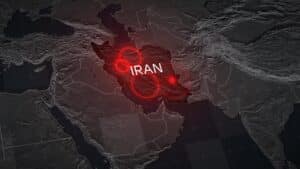
The conflict between the United States and Iran has deep roots. When the U.S. military struck three nuclear facilities in Iran on June 22, 2025, President Donald Trump declared that the goal of disabling the sites had been achieved, though intelligence sources remained uncertain as to the extent of the damage.1 For some Americans, the strikes seemed to come out of nowhere. But the context extends back to the 1950s at least, making it difficult to understand this newest chapter of U.S.-Iran conflict without first understanding what came before.

Oil, a Coup, and the Cold War

In 1951, Iranian Prime Minister Mohammad Mossadegh expelled English oil manufacturers from Iran and nationalized Iran’s oil industry, arguing that England was exploiting Iran’s resources without fair compensation. England responded by embargoing Iranian oil, which hurt Iran’s economy badly. Resultant political unrest in Iran, paired with the country’s massive oil resources, made President Dwight Eisenhower concerned that Iran would become a powerful ally of the Soviet Union in the Cold War, and that other countries could follow. In 1953, the Central Intelligence Agency supported a coup in Iran that overthrew Mossadegh. As intended, political power was handed to Iran’s shah, who had previously been a monarchic figurehead without much power.

The shah allied Iran solidly with the United States. President Eisenhower announced his “Atoms for Peace” program in 1953, in which the United States provided nuclear reactors, enriched uranium (or fuel for the reactors), other necessary technology and equipment, and training expertise to countries that promised to use the material only for non-military purposes (mostly energy) and to allow inspections to verify this. The shah requested to participate, and Iran’s first nuclear reactor began operation in 1967. Both the reactor and its fuel were American in origin.

Revolution and Rupture

However, political unrest returned to Iran. The shah banned political opposition, censored the press, and relied on secret police to violently silence dissidents. Unemployment, corruption, and inequality convinced many Iranians that the shah only cared about elites, and some blamed America for handing power to the shah in the first place. Strikes and protests swept the country. Religious clergy joined the movement, arguing that the shah’s secularism had damaged the country. The 1979 Iranian Revolution ended Iran’s monarchy and handed power to Ayatollah Ruhollah Khomeini, one of the religious clerics, who declared Iran an Islamic republic and cut diplomatic ties with America. The Revolutionary Guards—then an informal religious militia formed by Khomeini—repressed other political groups who were not under the control of the ruling clerical organizations loyal to Khomeini, and the violence often exceeded what took place under the shah.2

Angry that the United States sheltered the shah, the Iranians took 66 Americans hostage in what had been the U.S. embassy in Tehran, holding 52 of them for 444 days. Iran’s Atoms for Peace program was terminated, and Iran’s secret police no longer fed intelligence to the United States. By 1984, the U.S. State Department had designated Iran as a state sponsor of terrorism for its role in supporting terrorist attacks on Americans, including Hezbollah’s 1983 bombing of a U.S. Marine compound in Beirut that killed 241 U.S. military personnel. Iran continues to hold that designation today for its longstanding support of Hezbollah, Hamas, the Houthis in Yemen, and militia groups in Iraq and Syria.3 In a March 2026 statement, the Trump White House declared, “More Americans have been killed by Iran than any other terrorist regime on Earth.”4

At the same time, throughout the 1980s, Iran kept its nuclear development secret from the United States but continued to fuel nuclear reactors with help from Russia, China, Pakistan, and North Korea; the Iranians also built additional nuclear facilities in the 1990s. Thus, there is significant distrust of Iran when it claims that its nuclear development is peaceful, intended to be used solely for energy and research.

Sanctions, Stuxnet, and the Nuclear Deal

After 2002, when U.S. intelligence discovered two of Iran’s clandestine nuclear facilities, President George W. Bush intensified economic sanctions on Iran, which slowed but did not stop Iran’s nuclear program. The relationship between the United States and Iran worsened significantly during President Barack Obama’s administration in 2010, when a cyberattack was conducted on an Iranian nuclear facility; a virus called “Stuxnet,” likely deployed by the United States and Israel in partnership, caused many Iranian nuclear machines to self-destruct—the first known digital weapon used to disrupt a nuclear facility.5

President Obama teamed up with five other major countries to negotiate with Iranian leaders, resulting in 2015’s Joint Comprehensive Plan of Action (JCPOA), which sought to limit Iran’s nuclear production and required Iran to submit to inspections from an international agency—both attempts to ensure that nuclear facilities in Iran would only produce energy, not weapons. In exchange, many sanctions on Iran were lifted.

The Deal Collapses

In his first term, President Trump withdrew from the JCPOA, arguing that it was a “one-sided deal.” He called provisions of the agreement which allowed Iran to resume its nuclear enrichment program when the agreement phased out by 2030 “totally unacceptable,” arguing that such provisions would spark a nuclear arms race in the Middle East. He also criticized the agreement’s inspection provisions as inadequate and its failure to prevent Iran from building ballistic missiles capable of delivering a nuclear warhead.6

When President Trump reimposed sanctions, Iran stopped following the plan as well, producing past set limits and reducing the frequency of inspections. By 2025, Iran had enriched enough uranium for an estimated four to five nuclear warheads. On June 15, 2025, Israel conducted air strikes in Iran, weakening Iran’s air defenses. President Trump viewed this as an opportunity to strike Iranian nuclear facilities to prevent Iran from becoming a nuclear threat.7 The United States struck one week later.

What Happened Next

In December 2025, Iran was gripped by widespread protests against economic turmoil and the longstanding repression of the governing regime. The regime responded by cutting nearly all internet access and killing thousands of civilians.8 Shortly after, the armed conflict between the United States and Iran escalated dramatically. A broader military campaign began in late February 2026, with more than 50,000 U.S. service members deployed to the region and the Strait of Hormuz—through which 20% of the world’s oil flows—effectively shut down.9 The war’s human and economic costs sparked a debate in Congress over whether to cut off funding for a military operation that lawmakers never voted to authorize. That debate is the subject of a separate Close Up post: Should Congress Prohibit Federal Funding for the War in Iran?

Discussion Questions

  1. The United States helped overthrow Iran’s government in 1953 and then provided Iran with nuclear technology through the Atoms for Peace program. How do these early decisions continue to shape the U.S.-Iran relationship today?
  2. Iran says its nuclear program is for energy and research, not weapons. The United States and Israel have used sanctions, cyberattacks, and military strikes to limit it. When, if ever, is it justified for one country to use force to prevent another from developing nuclear capabilities?
  3. The JCPOA used diplomacy to try to limit Iran’s nuclear program; President Trump withdrew from it and later used military strikes. What are the advantages and disadvantages of diplomatic agreements versus military action as tools of foreign policy?
  4. If military intervention is being considered, are cyberattacks like Stuxnet a better or worse alternative to conventional strikes? Explain your reasoning.
  5. After reading this backgrounder, what questions do you still have about the U.S.-Iran relationship that would help you evaluate the current debate over the war?


As always, we encourage you to join the discussion with your comments or questions below.

Close Up is proud to be the nation’s leading nonprofit civic education organization, working with schools and districts across the country since 1971. If you would like to partner with us or learn more about our experiential learning programs, professional development, or curriculum design and consulting, contact us today! 


Sources

Image Credit: Shutterstock/artemegorovv
[1] Washington Post: https://www.washingtonpost.com/national-security/2025/06/24/us-iran-bomb-assessment-nuclear-sites-not-destroyed/
[2] Britannica: https://www.britannica.com/event/Iranian-Revolution/Aftermath
[3] U.S. State Department: https://www.state.gov/reports/country-reports-on-terrorism-2023/
[4] The White House: https://www.whitehouse.gov/releases/2026/03/the-iranian-regimes-decades-of-terrorism-against-american-citizens/
[5] New York Times: https://www.nytimes.com/2012/06/01/world/middleeast/obama-ordered-wave-of-cyberattacks-against-iran.html
[6] National Public Radio: https://www.npr.org/2018/05/08/609383603/trump-u-s-will-withdraw-from-iran-nuclear-deal
[7] National Public Radio: https://www.npr.org/2025/06/21/nx-s1-5441127/iran-us-strike-nuclear-trump
[8] Amnesty International: https://www.amnesty.org/en/latest/campaigns/2026/01/what-happened-at-the-protests-in-iran/
[9] CBS News: https://www.cbsnews.com/news/u-s-launches-strikes-iranian-nuclear-facilities-trump-says/


Should Congress Prohibit Federal Funding for the War in Iran?

Five weeks into the war between the United States, Israel, and Iran, the human and economic toll continues to mount. Thirteen U.S. service members have been killed in combat and more than 200 wounded; Iranian authorities report at least 2,076 people killed and more than 26,500 wounded inside Iran since strikes began on February 28, 2026. Israel has reported approximately 25 fatalities and over 6,400 civilian injuries from Iranian missile and drone attacks, and additional deaths have been recorded in Bahrain, Iraq, Kuwait, Oman, Saudi Arabia, and the United Arab Emirates. The closure of the Strait of Hormuz—through which about 20% of the world’s oil typically flows—has driven Brent crude above $100 per barrel and pushed the national average for gasoline in the United States past $4 per gallon, with diesel above $5.60. Independent analysts estimate the direct cost to the U.S. Treasury at roughly $35 billion to $45 billion in the first month, and the Pentagon has formally requested a $200 billion supplemental from Congress on top of a proposed $500 billion increase to the fiscal 2027 defense budget.¹

The Constitution divides the power to wage war between Congress and the president. Article I grants Congress the sole authority to declare war and control federal spending.² Article II designates the president as commander-in-chief of the armed forces.³ The Founders deliberately split these powers to ensure that no single leader could commit the nation to war alone. In an attempt to reinforce this principle, Congress passed the War Powers Resolution in 1973, requiring the president to notify Congress within 48 hours of deploying forces into hostilities and to withdraw them within 60 days unless Congress authorizes their continued use.⁴ Despite this, every president since Richard Nixon has either sidestepped the law or questioned its constitutionality, and it has never successfully ended a military operation.⁵

The roots of the current conflict trace back to 2018, when President Donald Trump withdrew the United States from the Iran nuclear deal, a multilateral agreement that had sought to cap Iran’s uranium enrichment in exchange for sanctions relief. Iran responded by accelerating its nuclear program; by 2025, it had enriched enough uranium for an estimated four to five nuclear warheads. In June 2025, in response to this threat, Israel launched strikes against Iran, and the United States joined with Operation Midnight Hammer, bombing three Iranian nuclear facilities.⁶ Congressional leaders were notified after the strikes were completed, and a war powers resolution failed in the Senate.⁷ Diplomatic talks followed but collapsed. On February 28, the United States and Israel launched Operation Epic Fury, a far broader campaign targeting Iranian leadership, military infrastructure, and nuclear sites.⁸ Iranian Supreme Leader Ali Khamenei was killed in the opening strikes.

More than 50,000 U.S. service members have been deployed to the region, and the Strait of Hormuz has been effectively shut down.⁹ Polling shows that a majority of Americans oppose the war: a Pew Research Center survey found that 59% believe the decision to strike Iran was wrong, and 61% disapprove of how the president is handling the conflict.¹⁰ Even within the president’s own party, some Republican lawmakers have expressed alarm over the war’s cost, duration, and the prospect of ground troops.¹¹

What Is Being Proposed?

On June 17, 2025, Sen. Bernie Sanders (I-Vt.) introduced S. 2087, the No War Against Iran Act, with seven cosponsors. The bill would prohibit federal funds from being spent on military operations in Iran unless Congress declares war or passes a specific authorization for the use of military force.¹² It explicitly states that the 2001 and 2002 Authorizations for Use of Military Force—passed after the terrorist attacks of September 11, 2001, and before the Iraq War—cannot be used to justify military action against Iran. The bill includes an exception allowing the president to use force in self-defense if the United States is attacked.¹³ Two war powers resolutions directing the withdrawal of U.S. forces from Iran have failed in the Senate, both on 47–53 votes.¹⁴

Arguments in Favor of Passing the Bill

Supporters of the No War Against Iran Act argue that the Constitution is clear: the power to declare war belongs to Congress. Yet, the United States is waging a full-scale military campaign against Iran—with more than 50,000 troops deployed and 13 service members killed—without a vote in Congress. “Our Founding Fathers entrusted the power of war and peace exclusively to the people’s elected representatives in Congress,” Sen. Sanders said when he introduced the bill.¹⁵ Supporters note that the War Powers Resolution was supposed to prevent exactly this kind of unauthorized conflict but has failed for 50 years, and that two war powers resolutions on Iran have already been voted down. If those tools do not work, they contend, Congress must turn to its most powerful check: the power of the purse.

Proponents also point out that opposition to the war crosses ideological lines. A Pew Research Center survey found that 59% of Americans believe the decision to strike Iran was wrong.¹⁶ Former Rep. Marjorie Taylor Greene (R-Ga.), once one of the president’s closest allies, called the war “the worst betrayal” of the “America First” promise, recalling, “We said ‘No More Foreign Wars, No More Regime Change!’ We said it on rally stage after rally stage.”¹⁷ Conservative commentator Tucker Carlson reportedly met with the president three times before the strikes to argue against military action.¹⁸ Sen. Rand Paul (R-Ky.) has called the national debt a greater threat than Iran. As Sen. Tim Kaine (D-Va.) has put it, “If you don’t have the guts to vote yes or no on a war vote, how dare you send our sons and daughters into war where they risk their lives.”¹⁹

Supporters further argue that the bill closes a critical legal loophole by barring the use of the 2001 and 2002 Authorizations for Use of Military Force to justify action against Iran—authorizations originally passed for Afghanistan and Iraq that, critics say, presidents have stretched far beyond what Congress intended. They emphasize the war’s costs to date, including billions of dollars spent, gas prices driven up sharply, and instability across the Gulf, and note that the Pentagon is now requesting $200 billion more for a war Congress never authorized. Even some Republicans have voiced concern: Rep. Lauren Boebert (R-Colo.) called herself “tired of the Industrial War Complex,” and Rep. Chip Roy (R-Texas) demanded to know, “What’s the mission here?”²⁰ “Another war in the Middle East could cost countless lives and waste trillions more dollars,” Sen. Sanders has warned.²¹ In supporters’ view, Congress has a duty to say: not one more dollar without a vote.

Arguments Against Passing the Bill

Opponents of the No War Against Iran Act argue that the bill is not a principled reassertion of congressional authority but a dangerous attempt to defund an active military operation while service members are in harm’s way. Thirteen Americans have died in the conflict, and critics contend that cutting off funding would not bring the rest home safely—it would leave them without the resources they need to operate and protect themselves. Sen. Lindsey Graham (R-S.C.) has framed the operation in sweeping terms: “The end of the largest state sponsor of terrorism is upon us. God bless President Trump, our military, and our allies in Israel.”²² Sen. Graham argues that the fall of Iran’s regime would reshape the Middle East, expanding the Abraham Accords and eliminating the proxy terror networks that have destabilized the region for decades.

Opponents also emphasize that Iran posed a genuine and serious threat to American security. Before Operation Epic Fury, Iran had enriched enough uranium for an estimated four to five nuclear warheads and was, according to the State Department, the world’s leading state sponsor of terrorism. Supporters of the operation argue that destroying Iran’s missile capabilities, eliminating its nuclear threat, and degrading its proxy networks are legitimate security goals. Sen. Graham has compared the moment to the fall of the Berlin Wall: “If the ayatollah falls, it will set in motion a similar sequence of events across the Middle East.”²³ Secretary of State Marco Rubio has said the administration “complied with the law 100%” regarding War Powers Resolution reporting.²⁴

Critics of the bill further argue that defunding a military operation does not end a war—it creates chaos. Troops and sailors cannot be instantly withdrawn, and supply chains and alliances take time to wind down. In their view, Congress should debate and vote on the use of force directly rather than pulling the financial rug out from under the military in the middle of an operation. They note that no presidential administration—Republican or Democratic—has ever accepted the War Powers Resolution as a binding constraint on executive authority.²⁵ Even some lawmakers seeking more oversight prefer briefings to a funding cutoff. Sen. Lisa Murkowski (R-Alaska) has called for open hearings, saying, “The people in Alaska are asking me how long is this going on? Are there going to be boots on the ground, how much is this going to cost?”²⁶ Opponents conclude that if Congress believes this war is unjustified, it should vote on a declaration of war or an authorization for the use of military force—not, in their words, hide behind the purse strings.

Discussion Questions

  1. What have you hear from friends, family members, and others in your life (including people and groups you engage with online) about the U.S. military efforts in Iran?
  2. The Constitution gives Congress the power to declare war and control federal spending, while the president serves as commander-in-chief. How should these powers be balanced when U.S. forces are already deployed in active hostilities?
  3. Supporters of the No War Against Iran Act argue that the “power of the purse” is the most effective check Congress has left on presidential war-making, while opponents argue that cutting off funding mid-conflict endangers troops in the field. Which view do you find more persuasive, and why?
  4. The bill explicitly states that the 2001 and 2002 Authorizations for Use of Military Force cannot be used to justify action against Iran. Should Congress periodically revisit and update older authorizations, or should presidents be able to rely on them for new conflicts?
  5. Public opinion polling shows a majority of Americans oppose the war, yet two war powers resolutions on Iran have failed in the Senate. What role should public opinion play in congressional decisions about war and peace?
  6. Rep. Roy asked, “What’s the mission here?” How clearly should the goals of a military operation be defined before Congress authorizes—or continues to fund—it?
  7. If you were a member of Congress, how would you vote on the No War Against Iran Act? What factors would guide your decision?


As always, we encourage you to join the discussion with your comments or questions below.

Close Up is proud to be the nation’s leading nonprofit civic education organization, working with schools and districts across the country since 1971. If you would like to partner with us or learn more about our experiential learning programs, professional development, or curriculum design and consulting, contact us today! 


Sources

Image Credit: Shutterstock/Mehaniq
[1] Casualty, Oil, Gas, and U.S. Fiscal Cost Figures Compiled from: Al Jazeera, “US-Israel Attacks on Iran: Death Toll and Injuries Live Tracker,” April 2026; Wikipedia, “2026 Iran War,” April 7, 2026; Statista, “Israeli Fatalities and Injuries in the U.S.-Israel War with Iran, February 28–March 30, 2026,” March 31, 2026; Wikipedia, “Economic Impact of the 2026 Iran War,” April 7, 2026; Time, “How High Could Gas Prices Go? What to Know About the Iran War’s Ongoing Impact,” March 31, 2026; American Enterprise Institute / Roger Pielke Jr., “The Economic Costs of the Iran War,” April 2026; VisaVerge, “2026 U.S.-Iran War Impact: Gas Prices and Visa Delays Explained,” April 2026.
[2] U.S. Constitution, Article I, Section 8: https://constitution.congress.gov/browse/article-1/section-8/
[3] U.S. Constitution, Article II, Section 2: https://constitution.congress.gov/browse/article-2/section-2/
[4] War Powers Resolution of 1973 (P.L. 93-148): https://www.congress.gov/bill/93rd-congress/house-joint-resolution/542
[5] History.com, “War Powers Act”: https://www.history.com/articles/war-powers-act
[6] CSIS, “What Operation Midnight Hammer Means for the Future of Iran’s Nuclear Ambitions”: https://www.csis.org/analysis/what-operation-midnight-hammer-means-future-irans-nuclear-ambitions
[7] The Hill, “Kaine Faces Uphill Battle on War Powers Resolution”: https://thehill.com/policy/defense/5762612-us-military-operation-iran/
[8] CSIS, “Operation Epic Fury and the Remnants of Iran’s Nuclear Program”: https://www.csis.org/analysis/operation-epic-fury-and-remnants-irans-nuclear-program
[9] S.J.Res. 116, 119th Congress, Findings: https://www.congress.gov/bill/119th-congress/senate-joint-resolution/116/text
[10] Pew Research Center, “Americans Broadly Disapprove of U.S. Military Action in Iran,” March 25, 2026: https://www.pewresearch.org/politics/2026/03/25/americans-broadly-disapprove-of-u-s-military-action-in-iran/
[11] CNN, “Cracks Emerge in GOP Over Iran War Cost,” March 19, 2026: https://www.cnn.com/2026/03/19/politics/iran-war-cost-republicans-congress
[12] U.S. Congress, S. 2087: https://www.congress.gov/bill/119th-congress/senate-bill/2087
[13] Senator Bernie Sanders, “NEWS: Sanders Introduces No War Against Iran Act,” June 16, 2025: https://www.sanders.senate.gov/press-releases/news-sanders-introduces-no-war-against-iran-act/
[14] CBS News, “Senate Rejects Attempt to Rein in Trump’s Power to Wage War on Iran”: https://www.cbsnews.com/news/senate-vote-iran-war-powers-resolution-trump/
[15] Sen. Bernie Sanders: https://www.sanders.senate.gov/press-releases/news-sanders-introduces-no-war-against-iran-act/
[16] Pew Research Center, March 2026: https://www.pewresearch.org/politics/2026/03/25/americans-broadly-disapprove-of-u-s-military-action-in-iran/
[17] Fortune, “Marjorie Taylor Greene Rips Iran Strikes as Trump Betraying America First,” February 28, 2026: https://fortune.com/2026/02/28/trump-america-first-bomb-iran-middle-east-regime-change/
[18] The Hill, “Tucker Carlson Sought to Talk Trump Out of Iran War,” March 3, 2026: https://thehill.com/homenews/media/5763289-tucker-carlson-trump-iran-war-report/
[19] WTOP, “Virginia Sen. Kaine Leads Push for War Powers Resolution on Iran”: https://wtop.com/liveblog-today-on-the-hill/2026/03/virginia-sen-kaine-leads-push-for-war-powers-resolution-on-iran/
[20] MSNBC, “Republicans are Already Fighting Over Trump’s $200 Billion War Supplemental,” March 27, 2026: https://www.ms.now/news/republicans-already-fighting-trump-200-billion-war-supplemental
[21] Sen. Bernie Sanders: https://www.sanders.senate.gov/press-releases/news-sanders-introduces-no-war-against-iran-act/
[22] Raw Story, “Lindsey Graham Preemptively Honors US Soldiers,” March 1, 2026: https://www.rawstory.com/lindsey-graham-2675419591/
[23] Senator Lindsey Graham, “Iran is Facing a Berlin Wall Moment,” Fox News, February 26, 2026: https://www.lgraham.senate.gov/public/index.cfm/press-releases?ID=B086D340-99B9-4B9D-8E6D-0395E7EC74A2
[24] White House, “Operation Epic Fury: Decisive American Power,” March 12, 2026: https://www.whitehouse.gov/releases/2026/03/operation-epic-fury-decisive-american-power-to-crush-irans-terror-regime/
[25] Wikipedia, “War Powers Resolution”: https://en.wikipedia.org/wiki/War_Powers_Resolution
[26] CNN, “Cracks Emerge in GOP Over Iran War Cost”: https://www.cnn.com/2026/03/19/politics/iran-war-cost-republicans-congress


Should Congress Reassert Its War Powers Over Venezuela?

On January 3, 2026, U.S. military forces conducted overnight strikes in Caracas, the capital city of Venezuela, capturing President Nicolás Maduro and his wife, Cilia Flores. President Donald Trump announced the operation from Mar-a-Lago, declaring that the United States would “run” Venezuela “until such time as we can do a safe, proper, and judicious transition.” Maduro was transported to New York, where he faces a 2020 federal indictment on charges including narco-terrorism conspiracy and cocaine importation.

The operation has reignited a longstanding constitutional debate: What role should Congress play in authorizing military action abroad? This week, the Senate will vote on a bipartisan war powers resolution sponsored by Sens. Tim Kaine (D-Va.), Rand Paul (R-Ky.), Chuck Schumer (D-N.Y.), and Adam Schiff (D-Calif.) that would block further military action in Venezuela without congressional approval.

What Is the War Powers Resolution?

The War Powers Resolution of 1973 was enacted by Congress over President Richard Nixon’s veto following revelations about secret military operations during the Vietnam War, including unauthorized bombings in Cambodia. The law was designed to ensure that “the collective judgment of both the Congress and the President” would apply to decisions about committing U.S. Armed Forces to hostilities abroad.

The resolution requires the president to notify Congress within 48 hours of deploying troops into situations involving hostilities and prohibits U.S. Armed Forces from remaining engaged for more than 60 days without congressional authorization. Since 1973, presidents have submitted over 130 reports to Congress under the resolution, though debates about its application and constitutionality have persisted across administrations.

What Is Being Proposed?

The current war powers resolution (S.J.Res.90) would direct the president to terminate the use of U.S. Armed Forces for hostilities within or against Venezuela unless explicitly authorized by a declaration of war or specific authorization for use of military force. The resolution is “privileged,” meaning Senate Majority Leader John Thune (R-S.D.) cannot prevent it from coming to the floor for a vote.

A similar resolution failed in November 2025 by a vote of 49-51, with only Sens. Paul and Lisa Murkowski (R-Alaska) joining Democrats in support. Sponsors hope the events of this weekend will persuade additional Republicans to support the measure.

Arguments in Favor of Passing the Resolution

Supporters of the resolution emphasize constitutional principles, congressional authority, and concerns about precedent.

  • Constitutional Authority: Sen. Kaine has been a vocal advocate for congressional war powers. “It’s time for Congress to get its a– off the couch and do what the Constitution mandates that we do,” he said. “We have to put this before the American people, not just in private settings, but in public hearings.” Sen. Kaine called President Trump’s unauthorized military action “a sickening return to a day when the United States asserted the right to dominate the internal political affairs of all nations in the Western Hemisphere.”
  • Bipartisan Concerns About Executive Overreach: Sen. Paul, a libertarian-leaning Republican, has consistently supported war powers resolutions regardless of which party holds the presidency. “The American people do not want to be dragged into endless war with Venezuela without public debate or a vote,” Sen. Paul said. “We ought to defend what the Constitution demands: deliberation before war.”
  • Questions About Legal Authority: Rep. Thomas Massie (R-Ky.) questioned the administration’s legal justification. “If this action were constitutionally sound, the Attorney General wouldn’t be tweeting that they’ve arrested the President of a sovereign country and his wife for possessing guns in violation of a 1934 U.S. firearm law,” he wrote. On the House floor, Rep. Massie invoked James Madison’s warning that “to the extent that war-making power devolves to one person, liberty dissolves.”
  • International Law Concerns: Legal scholars and international bodies have raised questions about the operation’s legality. United Nations Secretary-General António Guterres said he was “deeply alarmed” and warned that “these developments constitute a dangerous precedent.” Mary Ellen O’Connell, a professor at Notre Dame Law School, told NBC News that the operation effectively amounts to a “kidnapping” that “violates core principles of the United Nations Charter.” Chatham House, a British foreign policy think tank, concluded that “it is difficult to conceive of possible legal justifications” for the operation under international law.
  • Concerns About Precedent: Rep. Don Bacon (R-Neb.), while praising the operation, expressed concern that “Russia will use this to justify their illegal and barbaric military actions against Ukraine, or China to justify an invasion of Taiwan.” French Foreign Minister Jean-Noël Barrot said the operation “contravenes the principle of non-use of force, which underpins international law.”

Arguments Against Passing the Resolution

Opponents of the resolution point to executive authority, the nature of the operation, and national security considerations.

  • Law Enforcement, Not War: Secretary of State Marco Rubio characterized the operation as a law enforcement action to arrest indicted fugitives, not an act of war. “At its core, this was an arrest of two indicted fugitives of American justice, and the Department of War supported the Department of Justice in that job,” Secretary Rubio said. He argued this distinction means congressional notification was unnecessary: “It’s just not the kind of mission that you can pre-notify because it endangers the mission.”
  • Dealing with a Dictator and Drug Trafficker: President Trump defended the action by pointing to Maduro’s 2020 indictment on drug trafficking charges and his authoritarian rule. “Nicolás Maduro was a thug and an illegitimate leader of Venezuela, terrorizing and oppressing its people for far too long,” President Trump said. Sen. Tom Cotton (R-Ark.) argued, “Congress doesn’t need to be notified every time the executive branch is making an arrest.”
  • Protecting American Interests: Vice President JD Vance defended the operation as protecting Americans from drug trafficking. “I understand the anxiety over the use of military force,” he wrote, “but are we just supposed to allow a communist to steal our stuff in our hemisphere and do nothing?” The administration has framed ongoing military actions against Venezuela as essential to combating narcotics flowing into the United States.
  • Operational Security: President Trump indicated weeks before the operation that he would not brief lawmakers in advance because he was worried they would “leak.” Supporters argue that the sensitive nature of military operations sometimes requires secrecy that precludes prior congressional notification.

Broader Questions

The debate extends beyond this specific resolution to fundamental questions about American foreign policy and constitutional governance. Even some who support the outcome of the Venezuela operation have raised concerns about how it was conducted. As Rep. Massie asked on the House floor: “Do we truly believe that Nicolás Maduro will be replaced by a modern-day George Washington? How did that work out in Cuba, Libya, Iraq, or Syria?”

Meanwhile, the resolution faces long odds. Even if it passes the Senate, it would need approval by the House of Representatives and the president’s signature—or veto-proof majorities in both chambers—to become law.

Discussion Questions

  1. The Constitution gives Congress the power to declare war and the president the role of commander in chief. How should these powers be balanced when responding to threats that may require quick action?
  2. The administration argues this was a law enforcement operation, not an act of war. Does this distinction matter for purposes of congressional authorization? Why or why not?
  3. Sen. Paul, a Republican, has joined Democrats in supporting war powers resolutions under both Democratic and Republican presidents. What does this suggest about whether war powers should be a partisan or nonpartisan issue?
  4. Legal scholars and international leaders have raised concerns that this operation sets a dangerous precedent. What precedents—positive or negative—might this action establish for future U.S. foreign policy or for other nations?
  5. Rep. Massie pointed to past U.S. interventions in Cuba, Libya, Iraq, and Syria that did not achieve their intended outcomes. How should past experiences with regime change inform current debates about military action?
  6. If you were a member of Congress, how would you vote on this resolution? What factors would guide your decision?

As always, we encourage you to join the discussion with your comments or questions below.


Sources

Featured Images: Copyright (c) 2025 Miha Creative/Shutterstock.
[1] NPR. “7 Takeaways from Trump’s Incursion into Venezuela.” 5 Jan. 2026.
[2] Fox News. “Kaine Tells Congress to ‘Get Its A– Off the Couch,’ Reclaim War Powers.” 5 Jan. 2026.
[3] The Hill. “Senate Voting Next Week on Resolution to Block Donald Trump’s Action in Venezuela.” 5 Jan. 2026.
[4] Sen. Tim Kaine. “Kaine, Paul, Schumer, & Schiff File War Powers Resolution on Venezuela.” Press Release. Dec. 2025.
[5] ABC News. “Republicans Largely Back Trump on Venezuela Action, Democrats Decry It as Unjustified.” 4 Jan. 2026.
[6] The Hill. “Rep. Thomas Massie Questions Legality of Trump’s Action in Venezuela.” 4 Jan. 2026.
[7] Chatham House. “The US Capture of President Nicolás Maduro—and Attacks on Venezuela—Have No Justification in International Law.” 4 Jan. 2026.
[8] UN News. “US Actions in Venezuela ‘Constitute a Dangerous Precedent’: Guterres.” 5 Jan. 2026.
[9] NBC News. “U.S. Allies and Foes Fear Maduro’s Capture Sets Precedent for More American Intervention.” 4 Jan. 2026.
[10] Atlantic Council. “Experts React: The US Just Captured Maduro. What’s Next for Venezuela and the Region?” 3 Jan. 2026.
[11] Congress.gov. “S.J.Res.90 – 119th Congress (2025-2026).”
[12] Congress.gov. “Understanding the War Powers Resolution.”


Should the Federal Poverty Line Be $140,000?

In late November 2025, a viral essay by financial strategist Michael W. Green sparked intense debate about how America measures poverty. Writing in his Substack newsletter, Green argued that the federal poverty line—currently set at approximately $31,200 for a family of four—is dangerously outdated. His provocative claim? The real poverty threshold should be closer to $140,000.

Green’s argument centered on how we calculate the poverty line. In 1963, economist Mollie Orshansky developed the original formula by multiplying the cost of a minimum food budget by three, since food then represented about one-third of family spending. Today, food accounts for only 5-7% of household budgets, while housing, health care, and childcare have grown significantly. Green argued that applying Orshansky’s logic with modern spending patterns would yield a poverty threshold between $130,000 and $150,000.

The essay went viral, drawing coverage from The Washington PostFortune, podcasters across the political spectrum, and cable news networks. It struck a nerve with Americans who feel economically squeezed despite statistics suggesting the economy is strong. But is $140,000 really a reasonable poverty line? And what does this debate reveal about how we think about economic well-being in America?

Arguments Supporting Green’s Concerns 

  • The official poverty measure is fundamentally outdated. Christopher Wimer, co-director of Columbia University’s Center on Poverty and Social Policy, acknowledged that Green “is echoing some things that poverty scholars have talked about for quite a while—the official poverty measure being antiquated.” The formula has not been structurally updated since the 1960s, even as American family budgets have transformed. “Food in budgets has become a much smaller piece,” noted Wimer. “Housing has gotten much more expensive.”
  • Middle-class families feel genuinely squeezed. A recent Harris Poll found that 64% of six-figure earners said their income is not a milestone for success but merely the bare minimum for staying afloat. As Libby Rodney, chief strategy officer of the Harris Poll, observed, “Even high earners are financially anxious—they’re living the illusion of affluence while privately juggling credit cards, debt, and survival strategies.” When a teacher and carpenter near Boston earning a combined $150,000 struggle to save for retirement while paying for childcare, something in our economic calculus may be off.
  • The “Valley of Death” traps working families. Green highlighted a real phenomenon economists call “benefit cliffs.” As families earn more income, they lose eligibility for programs like Medicaid, the Supplemental Nutrition Assistance Program, and housing assistance—sometimes losing more in benefits than they gain in wages. The Atlanta Federal Reserve has documented these cliffs extensively, showing how a family might be worse off earning $70,000 than $50,000 because of lost benefits. This creates perverse incentives that can trap families in lower-income brackets.

Arguments Against the $140,000 Figure

  • The math does not hold up to scrutiny. Economist Noah Smith, in his newsletter Noahpinion, called the $140,000 figure “very silly.” He pointed out that Green used average spending figures as if they were minimum requirements—but averages include plenty of discretionary spending. Green also used cost-of-living data from Essex County, New Jersey, one of the most expensive areas in America, while presenting his numbers as “conservative, national-average data.”
  • Green significantly understated typical family income. Economist Jeremy Horpedahl noted that while Green repeatedly cited median household income of $80,000, the relevant figure—median income for married couples with two earners—is approximately $142,000. For the exact family type Green described, half of American families already meet or exceed his proposed threshold.
  • Better poverty measures already exist. Scott Winship of the American Enterprise Institute emphasized that the Census Bureau already publishes a Supplemental Poverty Measure (SPM) that accounts for housing, utilities, and government benefits—addressing many of Green’s concerns. The SPM shows a poverty rate of about 12.9%, higher than the official 10.6%, but nowhere near the two-thirds of Americans Green implies are poor.
  • Confusing “comfortable” with “not poor” distorts our understanding. Tyler Cowen, an economist at George Mason University, argued that Green conflated the poverty line with a middle-class comfort threshold. As Megan Curran of Columbia’s Center on Poverty and Social Policy put it, “A lot of people up and down the economic spectrum are struggling with affordability issues. [But] how many people have incomes below this real deprivation or suffering threshold—that has declined over time.”

What This Debate Reveals 

The passionate response to Green’s essay—both supportive and critical—reveals a genuine tension in American economic life. Economic indicators show historically low unemployment, rising wages, and declining official poverty rates. Yet many families, including those earning six figures, report feeling financially precarious. This gap between statistics and people’s experiences and anxieties deserves serious examination.

The debate also raises fundamental questions about what government should measure and why. The poverty line is not just an academic exercise—it determines eligibility for programs affecting millions of Americans. If we dramatically raised the threshold, should vastly more Americans qualify for government assistance? Or would that fundamentally change what “poverty” means?

Perhaps most importantly, this controversy highlights how different Americans experience the same economy. A $140,000 income means something very different in San Jose, California, than in Little Rock, Arkansas. For a family with young children requiring full-time childcare, that income stretches far less than for families without children or with a stay-at-home parent. These regional and life-stage variations matter enormously for policy.

Discussion Questions

  • What should the federal poverty line actually measure—bare survival, basic participation in society, or something else? How should we define economic “need”? 
  • If families earning six-figure incomes genuinely feel financially stressed, is the problem with how we measure poverty, with the cost of living, with expectations, or with something else entirely? 
  • The “Valley of Death” concept suggests that earning more money can sometimes leave families worse off due to lost benefits. What responsibility, if any, does government have to smooth these transitions? What are the trade-offs of different approaches? 
  • Should poverty thresholds vary significantly by region, as they do in the SPM, or should there be a single national standard? What are the advantages and disadvantages of each approach? 
  • Green’s essay resonated with millions of Americans despite being criticized by many of his fellow economists. What does this disconnect between expert opinion and public sentiment suggest about how we communicate economic data and policy?


As always, we encourage you to join the discussion with your comments or questions below.


Sources

[1] Green, Michael W. “Part 1: My Life Is a Lie: How a Broken Benchmark Quietly Broke America.” Yes, I Give a Fig (Substack). 23 Nov. 2025.
[2] Smith, Noah. ‘The $140,000 Poverty Line is Very Silly.” Noahpinion (Substack). 29 Nov. 2025.
[3] Horpedahl, Jeremy. “The Poverty Line is Not $140,000.” Economist Writing Every Day. 26 Nov. 2025.
[4] Winship, Scott. “How Not to Redefine Poverty” and “The Real Math of Survival?” First World Problems (Substack). Nov. 2025.
[5] Washington Post. “Meet the Investor Who Thinks the Poverty Line Should be $140,000.” 29 Nov. 2025.
[6] U.S. Census Bureau. “Poverty in the United States: 2024.” Supplemental Poverty Measure Data.
[7]  Wimer, Christopher, et al. Center on Poverty and Social Policy. Columbia University. Historical Supplemental Poverty Measure Research.
[8] Federal Reserve Bank of Atlanta. “Policy Rules Database.” Benefits Cliff Analysis Tools.
[9] Harris Poll. Survey on Six-Figure Earner Financial Anxiety. Nov. 2025.


Should ICE Agents Be Required to Visibly Identify Themselves?

In recent months, videos of Immigration and Customs Enforcement (ICE) agents conducting operations while wearing masks or face coverings have sparked debates about law enforcement accountability, transparency, safety, and privacy. In response, some lawmakers at the federal and state levels have introduced legislation aimed at requiring ICE agents and other law enforcement officials to visibly identify themselves during enforcement activities.

What Is Being Proposed?

At the federal level, the VISIBLE Act (S. 2212) would prohibit ICE agents from concealing their faces or obscuring their badge numbers during immigration enforcement operations.1 Sen. Alex Padilla (D-Calif.), who introduced the bill alongside Sen. Cory Booker (D-N.J.), argued, “Reports of individuals impersonating ICE officers have only increased the risk to public and officer safety. The lack of visible identification and uniform standards for immigration enforcement officers has created confusion, stoked fear, and undermined public trust in law enforcement.”2

Also at the federal level, the Immigration Enforcement Identification Safety Act, introduced by Sens. Mark Warner (D-Va.) and Tim Kaine (D-Va.), would require ICE agents to display their agency and name or badge number while removing most face coverings. Sen. Kaine explained the bill’s origins: “They were confused because the ICE agents were wearing masks and were not wearing anything that identified themselves as ICE agents. So, is this a gang, are these kidnappers, are these rogue agents?”3

Similar measures have been introduced in several states:

  • California’s No Secret Police Act (SB 627), signed into law by Gov. Gavin Newsom (D) in September 2025, prohibits federal and local law enforcement from wearing ski masks and similar masks.4 State Sen. Scott Wiener (D), the bill’s author, stated: “Law enforcement should never be easily confused with the guy in the ski mask robbing a liquor store, yet that’s what’s happening with ICE’s extreme masking.”5
  • Illinois’ HB 4086 would require law enforcement officers to display their agency and name or badge number while removing most face coverings. State Rep. Barbara Hernandez (D) posted: “We live in a democracy, not a police state. We’ve seen too many examples across the country of masked individuals with no identification carrying firearms and stoking fear in communities.”6

What Are the Arguments in Favor?

Proponents of identification requirements emphasize accountability, civil liberties, and public safety.

  • Government Accountability and Transparency: Scott Shuchart, a former ICE and Department of Homeland Security Office for Civil Rights and Civil Liberties official, argued, “Masked, plainclothes officers create an unreasonable risk of escalating violence and unnerve everyone who sees them.”7 Sen. Patty Murray (D-Wash.) added, “Communities around the country have been clear: we should not have armed, masked, and unidentified individuals prowling around neighborhoods and snatching people off the street.”8
  • Civil Liberties and Due Process: The American Civil Liberties Union has raised concerns about accountability, noting that masked enforcement creates “a recipe for civil rights abuses and government waste.”9 The New York City Bar Association stated in a formal position: “The widespread practice of hiding the identity of all officers conducting detentions is more likely to be exactly what it seems: an attempt to evade accountability for abuses by those purporting to enforce the law.”10
  • Public Safety Concerns: Sens. Warner and Kaine wrote to ICE leadership, citing warnings from the International Association of Chiefs of Police that “members of the general public may be intimidated or fearful of officers wearing a face covering, which may heighten their defensive reactions.”11 They continued: “The failure of ICE officers and agents to promptly and clearly identify who they are and the authority under which they are acting has led witnesses of immigration enforcement operations to justifiably question the law enforcement status, authority, and constitutionality of ICE officers and agents and their operations.”12 Supporters also point to rising incidents of impersonation. California’s SB 627 cited multiple cases, including a man in North Carolina arrested for allegedly posing as an ICE officer and sexually assaulting a woman under threat of deportation.13
  • Community Impact: Local activists and community leaders have been particularly vocal about the impact of masked enforcement on their neighborhoods. Leonardo Quintero, chairperson of Chicago’s 12th Police District Council, described the community impact: “It’s a fear tactic; it’s a tactic that’s used to normalize state violence through threat. If you don’t know who is doing something to you, you don’t know how you’re supposed to protect yourself.”14 Quintero and other District Council members wrote to Chicago officials demanding accountability: “At a very minimum, we need to know exactly who they are as they approach any resident. That is: no mask and having an identifiable agency [tag], as well as a badge or name tag.”15

What Are the Arguments Against?

Opponents of identification requirements raise concerns about agent safety, federal authority, and operational effectiveness.

  • Agent Safety: According to DHS, attacks against ICE officials have increased by more than 800% this year compared to the same time period in 2024. There have been several instances of violence directed at ICE agents and facilities in 2025, including an armed attack against a Texas detention center in July.16 ICE Acting Director Todd Lyons told CBS News: “I’m not a proponent of the masks. However, if that’s a tool that the men and women of ICE to keep themselves and their family safe, then I will allow it.”17
  • Agent Privacy: DHS has defended the practice, with Assistant Secretary Tricia McLaughlin stating: “These sanctuary politicians are trying to outlaw officers wearing masks to protect themselves from being doxed and targeted by known and suspected terrorist sympathizers.”18 John Sandweg, former acting director of ICE in President Barack Obama’s administration, acknowledged: “There are times where I think for officer safety reasons, I understand why they would wear masks. … There are going to be cases where there is a potential risk to the safety of the officers themselves, or their families, where they could be identified and then that could lead to them being targeted.”19
  • Operational Concerns: Critics of these laws suggest that visible identification requirements could compromise enforcement effectiveness in jurisdictions which are already resistant to cooperating with immigration enforcement actions.
  • Federal Authority and Enforcement: Brian Marvel, President of the Peace Officers Research Association of California, argued that states are attempting to overreach their authority. “California has no legal authority to regulate federal operations. We cannot require the U.S. Navy to switch to electric vessels when entering our shorelines,” he said. “And we cannot tell ICE how to operate. SB 627 is unconstitutional.”20 Ed Obayashi, a special prosecutor in California and an expert on national and state police practices, noted that enforcement would be challenging because “federal officers can’t be prosecuted by state courts for activities performed during their official duties.”21

Balancing Perspectives

Some experts argue that the debate requires nuance. Temple Law School Professor Jules Epstein wrote: “Established law enforcement agencies in America, while far from perfect, have figured out how to protect their agents and accomplish their goals without hiding behind masks. If ICE is to be seen as a legitimate and lawful agency, it must do the same.”22 Meanwhile, Stephen Kass of the New York City Bar Association distinguished between legitimate uses and current practices: “It may well be a reason for masking if you are engaged in a clandestine operation against an organized drug ring or a well-armed gang of some sort. But that’s not what’s happening here.”23

Constitutional and Practical Questions

The debate also raises important questions about federalism—the division of power between state and federal governments. Can states regulate how federal agents operate within their borders? The Constitution’s Supremacy Clause establishes that federal law takes precedence over state law, but states also have interests in protecting their residents’ civil liberties and public safety.

There’s also the practical question of enforcement. Mark Reichel, a Sacramento-based attorney with experience litigating federal cases, suggests California’s law might have more teeth than critics claim: “In light of the fact their own rules require them to identify themselves anyway, there is a good chance this law actually may be upheld in California only for ICE agents who operate in California.”24

In October 2025, U.S. District Judge Sara Ellis granted a temporary injunction requiring federal immigration agents in Chicago and surrounding areas to wear visible identification when not working undercover—demonstrating that courts may be willing to impose such requirements.25

Discussion Questions

  • How should we balance law enforcement officers’ safety and effectiveness with government transparency and accountability?
  • What role, if any, should states play in regulating federal law enforcement activities within their borders?
  • Are there situations in which law enforcement anonymity is justified? If so, what circumstances would warrant it? If not, why not?
  • How can we ensure both officer safety and individual rights are protected during enforcement operations?
  • What mechanisms exist beyond visible identification to hold federal agents accountable for their actions?
  • Does the use of masks by law enforcement affect public trust and community-police relations? Explain your reasoning.
  • What role should community members play in shaping policies about law enforcement practices in their neighborhoods?

As always, we encourage you to join the discussion with your comments or questions below.


Sources

[1] 2212 VISIBLE Act. 119th Congress (2025).
[2] Sen. Alex Padilla. “Padilla, Booker Unveil New Bill to Require Immigration Officers to Display Clear Identification.” Press Release. 8 Jul. 2025.
[3] Sens. Mark Warner and Tim Kaine. “No Masks for ICE Agents: Virginia Lawmakers Introduce Legislation to Increase Transparency.” FOX 5 DC. 2 Aug. 2025.
[4] No Secret Police Act. S.B. 627. California Legislature (2025).
[5] Sen. Scott Wiener. “Landmark Bill to Ban Extreme Masking By Local & Federal Law Enforcement Heads To the Governor.” Press Release. Sep. 2025.
[6] Alton Telegraph. “New Bill Would Ban Law Enforcement Officers from Hiding Their Faces in Illinois.” 28 Jul. 2025.
[7] Newsweek. “ICE Agents Forced to Wear Visible ID Under New Bill.” 8 Jul. 2025.
[8] Sen. Patty Murray. “Murray, Padilla, Booker, Colleagues Unveil New Bill to Require ICE to Display Clear Identification.” Press Release. 8 Jul. 2025.
[9] American Civil Liberties Union. “How Expanded 287(g) Program Turns Local Police Into Deportation Agents.” 11 Sep. 2025.
[10] New York City Bar Association. “Statement on Wearing of Masks by ICE Agents.” 20 Jun. 2025.
[11] Sens. Mark Warner and Tim Kaine. “Warner, Kaine Push ICE to Require Agents Identify Themselves, Limit Use of Masks and Face Coverings During Enforcement Operations.” Press Release. 2025.
[12] Ibid
[13] Sen. Scott Wiener. “Governor Newsom Signs Senator Wiener’s Ban on Extreme Masking by ICE & Other Law Enforcement.” Press Release. Sep. 2025.
[14] Mina Bloom. “ICE Agents In Chicago Area Who Aren’t Undercover Must Wear Badges Or IDs, Federal Judge Rules.” Block Club Chicago. 10 Oct. 2025.
[15] Francia Garcia Hernandez. “Can Local Officials Stop ICE Agents From Hiding Behind Masks? They’re Trying.” Block Club Chicago. 7 Jul. 2025.
[16] CBS News, “ICE Head Says He Won’t Block Agents from Wearing Masks, Confirms Use of Medicaid Data.” 19 Jul. 2025.
[17] Ibid.
[18] Newsweek. “ICE Agents Forced to Wear Visible ID Under New Bill.” 8 Jul. 2025.
[19] Newsweek. “ICE Agents’ Mask Culture Shift Risks Street Violence: Obama ICE Chief.” 9 Jun. 2025.
[20] Brian R. Marvel, “SB 627: California’s ‘Secret Police’ Bill Endangers Local Officers.” Police1, 14 Oct. 2025.
[21] KCRA. “California Proposal Would Crack Down on Masked Law Enforcement.” 20 Jun. 2025.
[22] Jules Epstein. “No Masks – No Mas.” Voices at Temple. 26 Jun. 2025.
[23] NPR. “Masked and Unmarked: The Quiet Rise of Concealed Immigration Raids.” 10 Jul. 2025.
[24] ABC10. “Legal Analyst: California ‘No Secret Police Act’ Could Trigger Federal Court Fight.” 2025.
[25] Mina Bloom. “ICE Agents In Chicago Area Who Aren’t Undercover Must Wear Badges Or IDs, Federal Judge Rules.” Block Club Chicago. 10 Oct. 2025.


President Trump’s Tariffs Go to Court

This morning, the Supreme Court heard oral argument in Learning Resources, Inc. v. Trump, a case which was consolidated with Trump v. V.O.S. Selections, Inc. The cases challenge whether a president can use the International Emergency Economic Powers Act (IEEPA)—a Cold War-era statute—to impose sweeping tariffs on imports by declaring an economic “emergency.”1

Here’s how we got here: In 2025, President Donald Trump’s administration announced broad “Liberation Day” tariffs on most imported goods, citing national security and trade deficits as the emergency. Importers—including the Illinois education-toy company Learning Resources—sued, arguing that IEEPA doesn’t let a president use emergency powers to create general revenue-raising tariffs.2 Lower courts issued conflicting rulings and stays,3 and the Supreme Court agreed to take the dispute on an accelerated schedule this fall.4

Learning Resources’ Argument

Learning Resources and allied challengers make two big points:

  • First, they say IEEPA doesn’t authorize tariffs like these because the law is about blocking or regulating specific transactions tied to an “unusual and extraordinary threat,” not rewriting the entire tariff schedule for most imports.5
  • Second, if IEEPA did allow that much, it would raise separation-of-powers problems—letting the president exercise Congress’ taxing and trade powers without clear limits (a nondelegation concern). Their briefs and supporters’ filings stress that Congress must speak clearly before handing over such economy-wide authority.6

Observers also note that challengers are likely to invoke the Supreme Court’s “major questions doctrine,” which requires clear congressional authorization for executive actions with “vast economic and political significance.” If billions or even trillions of dollars in tariffs are at stake, they argue, IEEPA’s general emergency language can’t carry that load.7

The Trump Administration’s Argument

The Trump administration defends the tariffs by reading IEEPA broadly: when a president declares a national emergency tied to foreign commerce, the statute lets the president regulate imports—including by imposing tariffs—to respond to the threat. They point to historic precedents where presidents used related authorities in economic emergencies and say courts should defer to the executive on national security judgments.8

Supporters also suggest that doctrines limiting agencies (like major questions) shouldn’t hamstring the presidency itself in foreign-affairs or national-security contexts—an area where the executive traditionally enjoys broader discretion.9

What Observers and Experts Are Saying

Legal commentators across the spectrum see these cases as a separation-of-powers test. Some, including conservative and libertarian scholars filing amicus briefs, argue that allowing IEEPA to support sweeping tariffs would gut Congress’ constitutional role over taxes and trade. They underscore nondelegation concerns and warn that broad emergency powers can’t replace precise statutes.10

Other analysts focus on the Supreme Court’s consistency: having used the major questions doctrine to strike down big Biden-era actions, will the justices apply the same standard to a Republican president’s tariff program? Vox’s preview calls the dispute a “loyalty test” for the Court’s stated principles. Meanwhile, SCOTUSblog frames the argument as both economically massive and a crucial check on presidential power.11

Conservative Washington Post columnist George Will adds that the ruling could either bolster or weaken the Court’s role in policing the boundaries between Congress and the president.

What Different Rulings Could Mean

If the Supreme Court sides with Learning Resources: Wide-ranging tariffs imposed under IEEPA could be struck down or limited, forcing the administration to seek new, specific authority from Congress. The decision might also strengthen major questions and nondelegation limits, signaling that presidents (of either party) can’t rely on general emergency laws for huge economic policies. Businesses could see tariff relief and more predictability—but future presidents could have less unilateral leverage in trade fights.

If the Court sides with the administration: The ruling could expand presidential latitude to use emergency powers in trade policy, at least where the executive asserts national security reasons. That outcome might weaken the major questions doctrine in the presidential (as opposed to agency) context and encourage future administrations to use emergency statutes for big economic moves without fresh congressional approval. Markets could face more uncertainty as tariff policy and economic policy shift with each administration.

If the Court issues a narrow decision: The justices might resolve only part of the dispute—e.g., reading IEEPA to permit some targeted trade measures but not across-the-board tariffs—or send issues back to lower courts, leaving short-term uncertainty but clarifying which tools presidents can use and where Congress must act.12

Discussion Questions

  1. What have you heard about tariffs? How have they impacted you, your family, and your community?
  2. What are the strongest points in Learning Resources’ argument against a president’s authority to impose tariffs? Do you find them convincing? Why or why not?
  3. How does the Trump administration justify using IEEPA for its tariff policy? Do you find it convincing? Why or why not?
  4. How does this case reflect the Constitution’s system of checks and balances between the legislative and executive branches?
  5. What does this case reveal about how emergency powers can be used—or potentially abused—in a democracy?
  6. The major questions doctrine says that major economic decisions require clear congressional approval. Do you think the Supreme Court should apply this doctrine equally to all presidents? Why or why not?
  7. If you were a Supreme Court justice, how would you decide this case? What principles or values would guide your reasoning?

As always, we encourage you to join the discussion with your comments or questions below.


Sources

[1] Supreme Court of the United States, November 2025 Argument Calendar: https://www.supremecourt.gov/oral_arguments/argument_calendars/MonthlyArgumentCalNovember2025.pdf
[2] Reuters: https://www.reuters.com/legal/government/us-supreme-court-declines-speed-up-decision-taking-up-fight-over-trump-tariffs-2025-06-20/
[3] Associated Press: https://apnews.com/article/b9c77788211d96f59d253f6c011d69cb
[4] SCOTUSblog: https://www.scotusblog.com/cases/case-files/learning-resources-inc-v-trump/
[5] U.S. Supreme Court Docket, No. 24-1287, Learning Resources, Inc. v. Trump: https://www.supremecourt.gov/docket/docketfiles/html/public/24-1287.html
[6] Ibid.
[7] Petitioners’ Certiorari Filing: https://www.supremecourt.gov/DocketPDF/24/24-1287/363370/20250617121408066_No-___Learning_Resources_Petition_For_A_Writ_Of_Certiorari_Before_Judgment.pdf
[8] U.S. Supreme Court Docket, No. 24-1287, Learning Resources, Inc. v. Trump: https://www.supremecourt.gov/docket/docketfiles/html/public/24-1287.html
[9] SCOTUSblog: https://www.scotusblog.com/2025/10/trumps-tariffs-face-supreme-court-scrutiny/
[10] Ibid.
[11] Vox: https://www.vox.com/politics/466510/supreme-court-trump-tariffs-loyalty-test-major-questions
[11] Oyez: https://www.oyez.org/cases/2025/24-1287


Media Literacy is Crucial for Young Citizens

In a world overflowing with information, teaching our students in grades 7-12 to be discerning consumers and creators of media isn’t just a good idea—it’s an imperative for the future of our democracy. As educators, we have a vital role in equipping students with the skills to navigate the complex landscape of news and information, fostering active, responsible citizenship and meaningful engagement in deliberative democracy. Media Literacy Week is a good reminder that helping to develop news literacy is a responsibility of all educators.

Think about the sheer volume of “news” your students encounter daily. It’s not just the evening broadcast or a printed newspaper anymore—and for young people it is rarely those things. It’s TikTok scrolls, Instagram stories, YouTube explainers, and an endless stream of links shared by friends. Without a critical lens, it’s incredibly easy for misinformation, biased reporting, or even outright propaganda to be accepted as truth. This isn’t just about identifying fake news; it’s about understanding the nuances of reporting, recognizing different perspectives, and questioning the sources behind the information.

The Pillars of News Media Literacy

So, what does news media literacy look like in practice for our students? It encompasses several key areas:

  1. Source Evaluation: Who created this information? What are their credentials? What is their agenda or funding? This goes beyond a simple “Is it Fox or CNN?” It delves into the underlying motivations and potential biases of all media producers, from individual influencers to major news organizations. Teaching students to look for “About Us” pages and author bios, to read laterally about sources by researching them online, and even to research the history of a publication can be incredibly insightful.
  2. Identifying Bias (Overt and Subtle): Bias isn’t always a malicious intent to deceive. It can be inherent in the language used, the stories chosen, the images presented, and even the framing of a headline. Help students understand the difference between objective reporting and opinion pieces, and how even “straight news” can subtly convey a particular viewpoint through word choice or emphasis.
  3. Understanding Media Formats and Purpose: A viral meme might be entertaining, but it’s rarely a reliable source of in-depth information. Students need to differentiate between news articles, editorials, advertisements, documentaries, and social media posts. Each format has a different purpose and level of journalistic rigor.
  4. Fact-Checking and Corroboration: In an age of deepfakes and manipulated images, the ability to fact-check is paramount. Encourage students to read laterally—meaning, when they encounter a claim, they open new tabs and see what other reputable sources say about it. Tools like Snopes, PolitiFact, and even a quick Google search with critical keywords can be invaluable.

Media Literacy and the Health of Our Democracy

The connection between media literacy and active citizenship is undeniable. A healthy deliberative democracy relies on an informed populace capable of engaging in respectful debate, making sound judgments, and holding leaders accountable. If citizens cannot distinguish credible information from partisan spin or outright falsehoods, their ability to participate effectively in civic life is severely hampered.

When students understand how news is constructed, they become less susceptible to emotional manipulation and more capable of forming their own well-reasoned opinions. They learn to question, to seek out diverse perspectives, and to engage in constructive dialogue, even when confronted with opposing viewpoints. These are not just academic skills; they are life skills essential for navigating an increasingly complex world and for strengthening the fabric of our society.

Integrating media literacy into your curriculum—which Close Up can help you do through our professional development training for educators and our innovative Civil Discourse Credential for students—doesn’t require a complete overhaul. It can be woven into English language arts through analyzing articles, into social studies through examining historical propaganda, or even into science by dissecting how scientific claims are presented in popular media.

Let’s empower our students to be more than just consumers of information. Let’s help them become critical thinkers, responsible citizens, and active participants in shaping our shared future. The future of our democracy depends on it.

As always, we encourage you to join the discussion with your comments or questions below.